Practical modules that fit directly into the workflow: from cost estimation to HSE control.
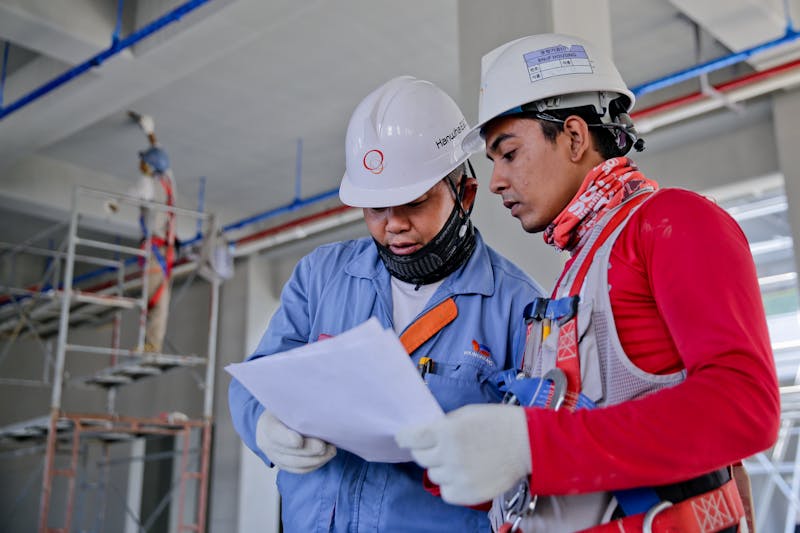
What engineers and project managers say after implementing ISO standards and revising cost estimates.
We resolve disputed interpretations before training begins. Below are the boundaries of terms, conditions for applying standards, and calculation rules that apply across all Baugrip programs.
In Baugrip programs, special equipment refers to self-propelled machines and mechanisms used on construction sites: excavators, mobile cranes, bulldozers, loaders, and similar machinery. Agricultural tractors and road rollers without attachments are not included in the calculation models.
The Baugrip methodology treats the cost of a machine-hour as the sum of direct costs: depreciation, fuel, maintenance and repairs, and operator wages. Overhead costs are accounted for as a separate line item and are not spread across categories. All calculations are based on current supplier prices, without forecast inflation.
Training focuses on the practical implementation of the standard's requirements in the processes of a construction enterprise. We do not prepare for certification audits but analyze how to build a quality management system tailored to a specific contractor's requirements. Accreditation of certification bodies is outside the scope of the course.
By contractor logistics, we mean the planning and control of material deliveries, equipment movement, and subcontractor schedules on site. The course does not cover customs clearance or international transportation—only the internal logistics of the facility.
The HSE block covers occupational safety requirements, industrial safety, and environmental control on the construction site. Training is based on current regulatory documents of the Russian Federation and CIS countries. We do not replace mandatory occupational safety training but supplement it with control automation tools.
All Baugrip programs are online courses with practical assignments and case studies. Access to materials is granted after payment and remains valid for 12 months. Feedback from instructors is provided within 2 business days after assignment submission. A certificate of completion is issued electronically.
Four steps — from application to implementation. Each stage is tailored to the specifics of your facility.
We start by analyzing your existing processes: we record the equipment fleet, materials accounting system, and HSE documentation. The result — a brief report on gaps.
We tailor the standard course to your specifics: we add examples from your facilities, calculation forms, and an ISO requirements map. The materials remain with your team.
You conduct seminars with your specialists. We work with real data: we calculate machine-hour costs, fill out HSE checklists, and verify material write-off schemes.
For 30 days after the program, we answer questions and help conduct the first internal audit. We provide you with templates that you can use independently.